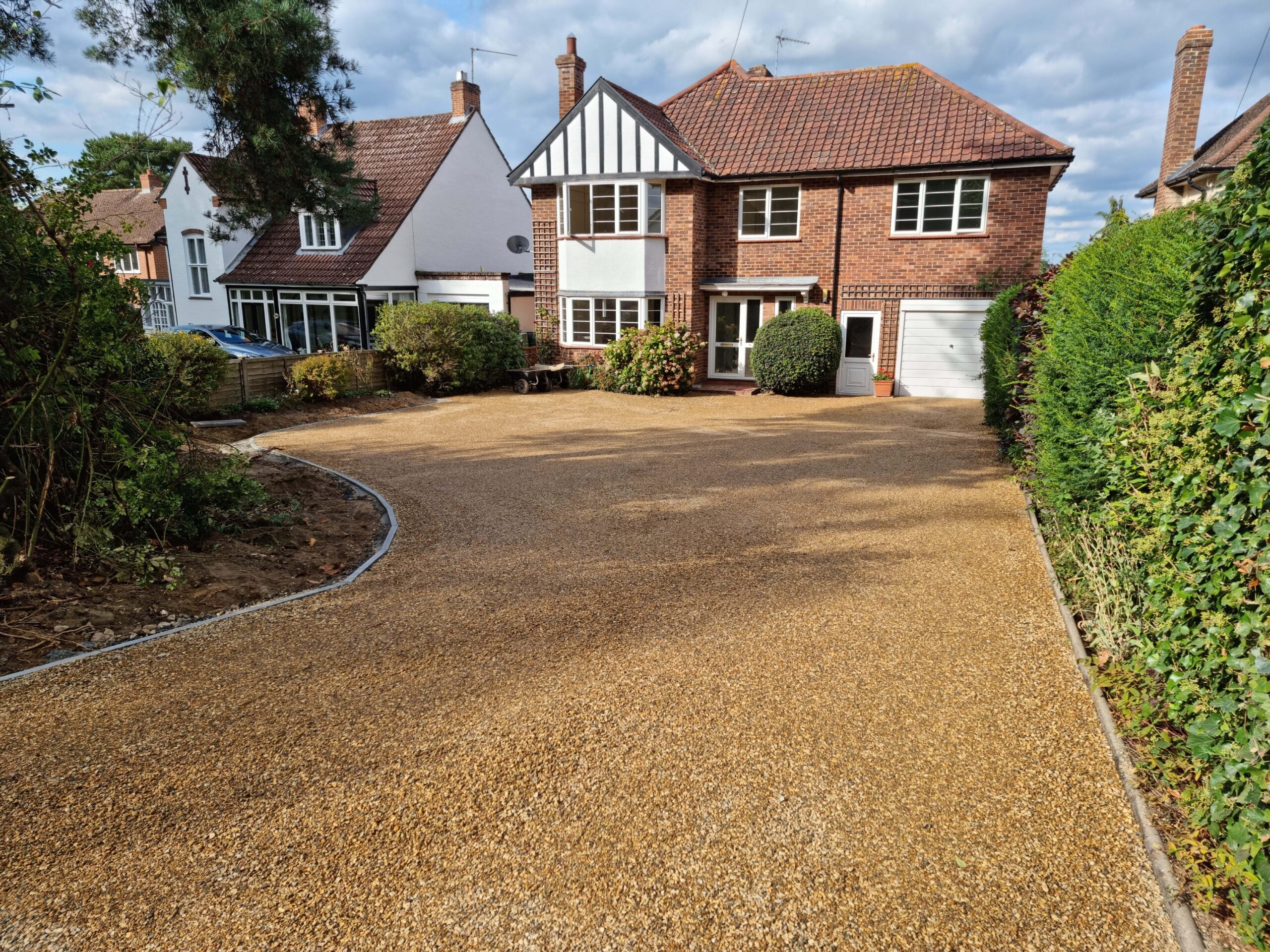
Is Tarmac the Right Surface for a Driveway That Handles Daily Vehicle Use?
Assessing Whether Tarmac Suits an Everyday Driveway
A driveway used every day needs a surface that can accommodate repeated arrivals, departures, parking and turning. Tarmac is often well suited to this role because it creates a firm, continuous surface without loose stones or joints between individual paving units.
However, the material alone does not determine how well a driveway performs. For properties in Halesworth, Suffolk, the condition of the ground, construction of the supporting layers, management of surface water and design of the access must all be considered. Proper preparation is particularly important where vehicles follow the same route and park in the same positions each day.
Why Tarmac Works Well for Daily Access
Tarmac is compacted to form a relatively smooth and consistent surface. This makes it practical for cars, pedestrians, bicycles, pushchairs and bins moving between the road and the property.
Its main practical qualities include:
- A firm surface for regular vehicle movements
- A uniform finish across parking areas
- Straightforward cleaning and debris removal
- Adaptability to curved or irregular layouts
- Clearly defined entrances and edges
- Suitability for gentle gradients
- Easy identification of developing surface defects
Because tarmac is laid as a continuous surface, there are no individual blocks to move or become uneven. This can be valuable where the driveway receives predictable daily use.
Daily Use Must Be Considered During Design
Two driveways of a similar size may experience very different demands. One might accommodate a single car entering and leaving once a day, while another supports several vehicles, frequent deliveries and repeated turning.
Before installation, it is useful to establish:
- How many vehicles will use the driveway
- Where each vehicle will normally park
- Whether drivers need to turn before leaving
- If vans or heavier vehicles will use the surface
- Which areas will experience braking or steering pressure
- Whether pedestrians share the same access
- How vehicles will enter without crossing the edges
These details influence the required construction and help prevent excessive wear in concentrated areas.
A Stable Sub-Base Is Fundamental
The visible tarmac distributes vehicle loading, but the layers beneath it provide the main structural support. If the ground is soft or the sub-base has not been properly compacted, repeated use may produce depressions, cracking or uneven sections.
Effective preparation may involve removing unsuitable material, excavating to the required depth and installing a suitable aggregate sub-base. Compaction should be completed in controlled layers so that weak pockets are not left beneath the finished surface.
A thicker surface cannot reliably compensate for movement in an inadequate foundation. The entire construction must be appropriate for the expected use.
Good Drainage Protects the Driveway
Water should run away from the property and avoid collecting in tyre tracks, parking positions or low areas. Persistent standing water can enter small defects and gradually affect the supporting layers.
A correctly planned tarmac driveway may require:
- Carefully formed surface falls
- Suitable drainage channels
- Adjustment of existing ground levels
- Consideration of water arriving from nearby surfaces
- Secure connections around drainage points
- Measures to prevent water gathering at the entrance
Drainage should be integrated into the design before work begins. Trying to correct unsuitable levels after installation can be considerably more disruptive.
Edge Support Is Particularly Important
The edges of a driveway are more vulnerable than the central surface because they have less surrounding support. Repeatedly driving or parking over an unrestrained edge may cause it to crack, spread or crumble.
Suitable kerbs or edging units help contain the driveway construction. The usable area should also be wide enough for normal vehicle movements so drivers are not forced onto the margins.
Where the access is narrow, the entrance and turning pattern need careful consideration. These are often the areas that receive the greatest repeated pressure.
Vehicle Manoeuvring Affects Surface Wear
Daily use involves more than vehicles travelling in a straight line. Braking, turning and stationary steering can place concentrated stress on the surface.
Drivers can help limit unnecessary wear by turning the steering wheel while the vehicle is moving slowly rather than when it is completely stationary. A practical layout should also provide enough room for manoeuvring without repeated sharp turns in one small area.
If vehicles always turn or park in the same position, those locations should be considered specifically during the design and preparation stages.
Is Tarmac Suitable for Sloping Driveways?
Tarmac can be used on many sloping driveways because the compacted surface follows carefully prepared levels. It provides a consistent route without individual units or loose aggregate shifting under normal use.
The gradient must still be assessed properly. Water flow, vehicle traction, braking areas and the connection to surrounding surfaces all affect the suitability of the final design. An excessively abrupt change in level can also cause vehicles to catch or scrape.
What Maintenance Does a Tarmac Driveway Need?
Tarmac is relatively straightforward to look after, but routine attention supports its condition. Leaves, soil and vegetation should be removed before they obstruct drainage or retain moisture around the edges.
Property owners should also monitor for:
- Small cracks
- Depressions where vehicles park
- Water remaining after rainfall
- Loose or crumbling margins
- Movement around drainage channels
- Surface damage near utility covers
- Areas affected by fuel or oil
A developing issue is often easier to assess before it spreads into the surrounding surface or supporting layers.
When Might Another Surface Be Preferable?
Tarmac may not be the preferred choice where a highly decorative pattern, individual colour combinations or a more traditional textured appearance is required. The property’s design and the owner’s visual preferences remain important.
The decision should balance appearance with practical considerations such as vehicle frequency, access, cleaning, drainage and maintenance. Comparing these requirements at the property provides a clearer answer than choosing a surface based solely on photographs.
The Value of a Site Assessment
A professional assessment can establish whether tarmac suits the existing ground and how the driveway will be used. It should consider the full construction rather than focusing only on the final surface.
Important factors include:
- Ground stability
- Existing driveway condition
- Vehicle type and frequency
- Parking and turning patterns
- Required excavation
- Sub-base specification
- Surface levels
- Drainage
- Edge restraints
- Connections with paths and entrances
This information allows the driveway to be designed around the property’s actual needs.
Conclusion
Tarmac can be a dependable and practical surface for a driveway that handles daily vehicle use. Its smooth, continuous finish supports regular access and creates a clearly defined parking area. Its performance, however, depends on suitable ground preparation, a well-compacted sub-base, effective drainage and properly supported edges.
If you are considering a tarmac driveway for your property in Halesworth, Halesworth Driveway Contractors can assess the site and explain whether the material is appropriate for your daily requirements. Careful planning helps ensure that the chosen surface is matched to the way the driveway will be used.
Call us on: 01508 505 225
Click here to find out more about Halesworth Driveway Contractors
Click here to complete our contact form and see how we can help with your driveways.